Theres a moment that happens all the time when people talk about their skin. They’ll say things like, “I’ve tried everything,” or “ I’m using good products,” or “I don’t understand why my skin still looks like this.” And then, when the idea of skin nutrition comes up, there’s this pause – like I’ve just asked them if their skin has a favourite meal.
Its not your fault. Most of us were taught to think of skincare as something that happens on the skin, not in the skin. We were taught to focus on serums, routines, ingredients, treatments – all that external stuff. And while those things matter, they’re only half the story.
Your skin is an organ. A living, nutrient-dependent organ. And like every organ in your body, it needs to be fed.
Not metaphorically.
Not spiritually.
Literally.
Your skin is built from nutrients. It repairs with nutrients. It regulates inflammation with nutrients. It produces collagen with nutrients. It heals with nutrients. It glows with nutrients.
So when your skin isn’t getting what it needs, it doesn’t matter how good your products are.
Lets talk bout what your skin is actually hungry for, why whole foods matter more than supplements, and why understanding skin nutrition can completely change the way you see your skin.
Skin Nutrition Isn’t a Trend – It’s How Your Skin Works
The internet has turned “skin nutrition” into a buzzword. There are powders, gummies, glow drinks, collagen shots, and supplements that promise miracles. But here’s the truth: Skin Nutrition isn’t a trend. It’s biology.
Your skin is constantly renewing itself. Everyday, its repairing damage, producing new cells, building collagen, regulating oils, managing inflammation, and protecting you from the world. All of these processes require nutrients – not in a vague “eat healthy” way, but in a specific, biochemical way.
Here’s what that looks like:
- Collagen synthesis requires vitamin C, zinc, copper, and amino acids.
- Barrier repair requires essential fatty acids, cholesterol, ceramides, and vitamin E.
- Cell turnover requires vitamin A, B vitamins, and adequate protein
- Inflammation regulation requires magnesium, omega 3’s, antioxidants, and polyphenols.
- Detoxification and hormone metabolism require B vitamins, sulphur compounds, and mineral..
If your skin doesn’t have the raw materials it needs, it struggles. It becomes inflamed, dull, reactive, slow to heal, or prone to breakouts – not because its problematic, but because its under resourced.
And here’s the part some people don’t realise: Your skin is the last organ to receive nutrients.
Your body prioritised your brain, heart, liver and other vital organs first. Whatever is left over goes to your skin.
So if your nutrient intake is low, inconsistent, or poorly absorbed, your skin will be the first place you see the effects.
This is why someone can use high-quality skincare and still struggle with breakouts, redness, slow healing, or premature ageing. The skin simply doesn’t have the internal resources it needs to function optimally.
Why Whole Food Matter More Than Supplements
Let’s get this out of the way early: Supplements can be helpful, but they are not the foundation.
Supplements are everywhere – collagen powders, “glow” drinks, skin gummies, beauty elixirs. There’re marketed as shortcuts. But your skin doesn’t want shortcuts. Your body recognises nutrients from whole foods in a way that supplements could never replicate.
Whole foods come with:
- Co-factors
- Enzymes
- Fibre
- Antioxidants
- Supportive compounds
- Natural ratios
These help y our body absorb, activate, and use nutrients properly.
For example:
- Vitamin C from kiwi comes with flavonoids that boost absorption
- Omega 3’s from salmon come with Vitamin D and astaxanthin
- Zinc from oysters comes with copper and amino acids
- Vitamin A from egg yolks comes with healthy fats that help your body use it
Supplements are like giving your skin a single ingredient. Whole foods are like giving your skin the entire recipe.
Your skin knows the difference.
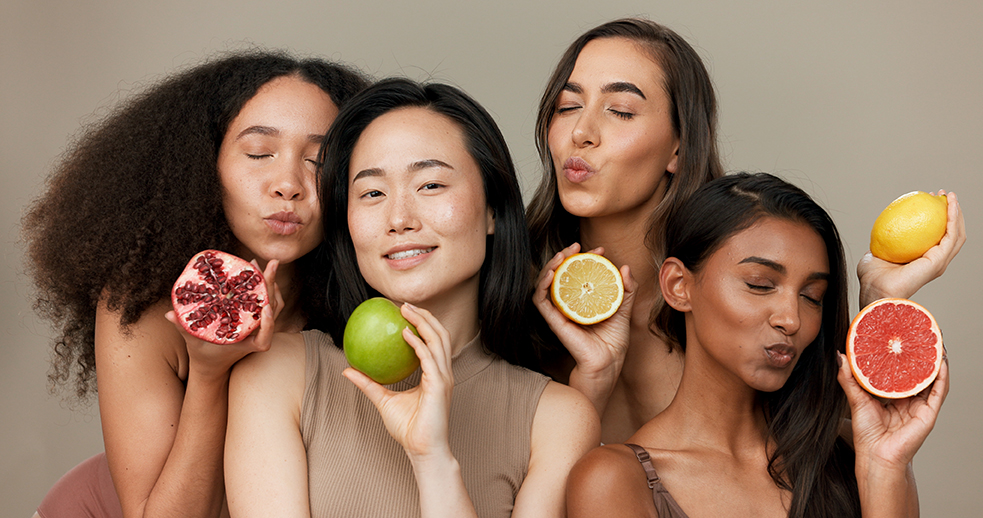
What Your Skin is Actually Hungry For
Let’s break down the nutrients your skin relies on – the ones that make the biggest difference, the ones that actually change how your skin behaves.
And let’s talk about the food that deliver them, because your skin doesn’t want powders. It wants real food.
ESSENTIAL FATTY ACIDS (EFAs)
If your skin feels dry, flaky, tight, inflamed, or easily irritated, this is often the missing piece.
EFAs are the building blocks of your skin barrier. Without them, your barrier becomes weak and porous, which means everything irritates your skin.
Examples of whole food sources:
- Salmon, sardines, mackerel
- Chia Seeds, flaxseeds, hemp seeds
- Walnuts
- Avocado (supportive fats, not EFA’s, but beneficial alongside them)
When people increase whole food omega 3s, their skin often become calmer, softer and more hydrated within weeks.
ZINC
Zinc is one of the most important minerals for skin health. It helps regulates inflammation, supports wound healing, balances oil production, and strengthens the immune response in the skin.
Low zinc is incredibly common in people with breakouts or slow healing skin.
Examples of whole food sources:
- Oysters (the highest natural source)
- Beef and lamb
- Pumpkin Seeds
- Chickpeas and Lentils
- Cashews
Your skin uses Zinc consistently. Its like fuel.
VITAMIN A
Vitamin A is the skins master regulator. It influences cell turnover, oil production, immune function and collagen synthesis.
Most people think of Vitamin A as something you apply (retinol), but dietary vitamin A is just as important.
Examples of whole food sources:
- Egg yolks
- Liver (even small amounts are powerful)
- Full-fat dairy (if tolerated)
- Orange and dark green vegetables (carrot, pumpkin, sweet potato, spinach – these provide beta-carotene, which then body converts to vitamin A)
Vitamin A from food is gentle, effective, and essential for long term skin health.
B VITAMINS
B vitamins support energy production, detoxification, methylation, and cellular repair. They also support the nervous system – which directly influences inflammation.
Examples of whole food sources:
- Chicken, turkey, beef
- Eggs
- Nutritional yeast
- Legumes
- Whole grains
- Leafy greens
When B vitamins are low, the skin often looks tired, sluggish or inflamed.
VITAMIN C
Vitamin C is essential for collagen synthesis and antioxidant protection. It also supports the immune system and helps regulate inflammation.
Examples of whole food sources:
- Kiwi
- Capsicum
- Citrus Fruits
- Strawberries
- Broccoli
- Tomatoes
Topical Vitamin C is great – but internal Vitamin C is non-negotiable.
MAGNESIUM
Magnesium regulates stress hormones, supports sleep, and helps manage inflammation. When magnesium is low, the skin becomes more reactive because the nervous system is more reactive.
Examples of whole food sources:
- Dark leafy greens
- Pumpkin seeds
- Almonds
- Black Beans
- Cacao
- Avocado
Magnesium is like a deep breath for your skin.
PROTEIN
Your skin is made of protein. Collagen, elastin, keratin – all protein. If your protein intake is low, your skin simply doesn’t have the building blocks it needs to repair and regenerate.
Examples of whole food sources:
- Chicken, turkey, beef, lamb
- Fish and seafood
- Eggs
- Greek yoghurt
- Legumes
- Tofu and tempeh
Protein is one of the most overlooked aspects of skin nutrition, especially for women.
Why Topical Skin Care Can’t Replace Internal Nutrition
Topical skincare is powerful. It can support the barrier, improve hydration, and influence the surface of the skin. But it cannot replace internal nutrition for one simple reason: topical ingredients work from the outside in, while nutrients work from the inside out.
You need both.
When you combine the two, you get results that last.

The Gut Skin Connection
You’ve probably heard people talk about gut-skin axis. And yes, it’s real – but it doesn’t need to be complicated or restrictive.
Your gut is responsible for digesting, absorbing, and delivering nutrients to your skin. If your gut is inflamed, sluggish, or imbalanced, your skin will feel the effects.
This doesn’t mean you need to cut out half your diet or follow extreme protocols. It means your body needs support.
When your gut is happy, your skin is calmer. It’s that simple.
Why Skin Nutrition Isn’t About Eating Perfectly
Lets be clear. Skin nutrition is not about perfection.
You don’t needs to eat clean, avoid entire food groups or obsess over every meal.
It simply needs enough nutrients, enough of the time. Skin nutrition is about supporting your body – not controlling it.
What Happens When You Feed Your Skin Properly
This is where things get exciting, because when you nourish from within, you start to see changes that topical skincare alone can’t achieve.
Breakouts become less frequent, the barrier strengthens, the skin becomes more stable and visibly more resilient.
These shifts aren’t superficial – theyre the natural result of giving your skin the resources it needs to function at its best.
This is why skin nutrition sits at the foundation of every treatment pathway at Indiahna Sage.
The Bottom Line
Your skin isn’t asking for perfection. Its asking for nourishment.
Its asking for whole foods, not gimmicks and quick fix powders.
Its asking for support.
Skin nutrition isn’t a trend – it’s the missing piece.
And once you give the skin the nutrients it’s been quietly craving, everything changes.
Disclaimer: Any nutritional information shared by Indiahna Sage is intended for general education and skin literacy. Because everyone’s skin, health history, and nutritional needs are unique, results will always vary, and a personalised consultation with me is essential before applying this information to your own routine. This content is not personal advice or a replacement for guidance from a qualified clinician or nutrition professional.